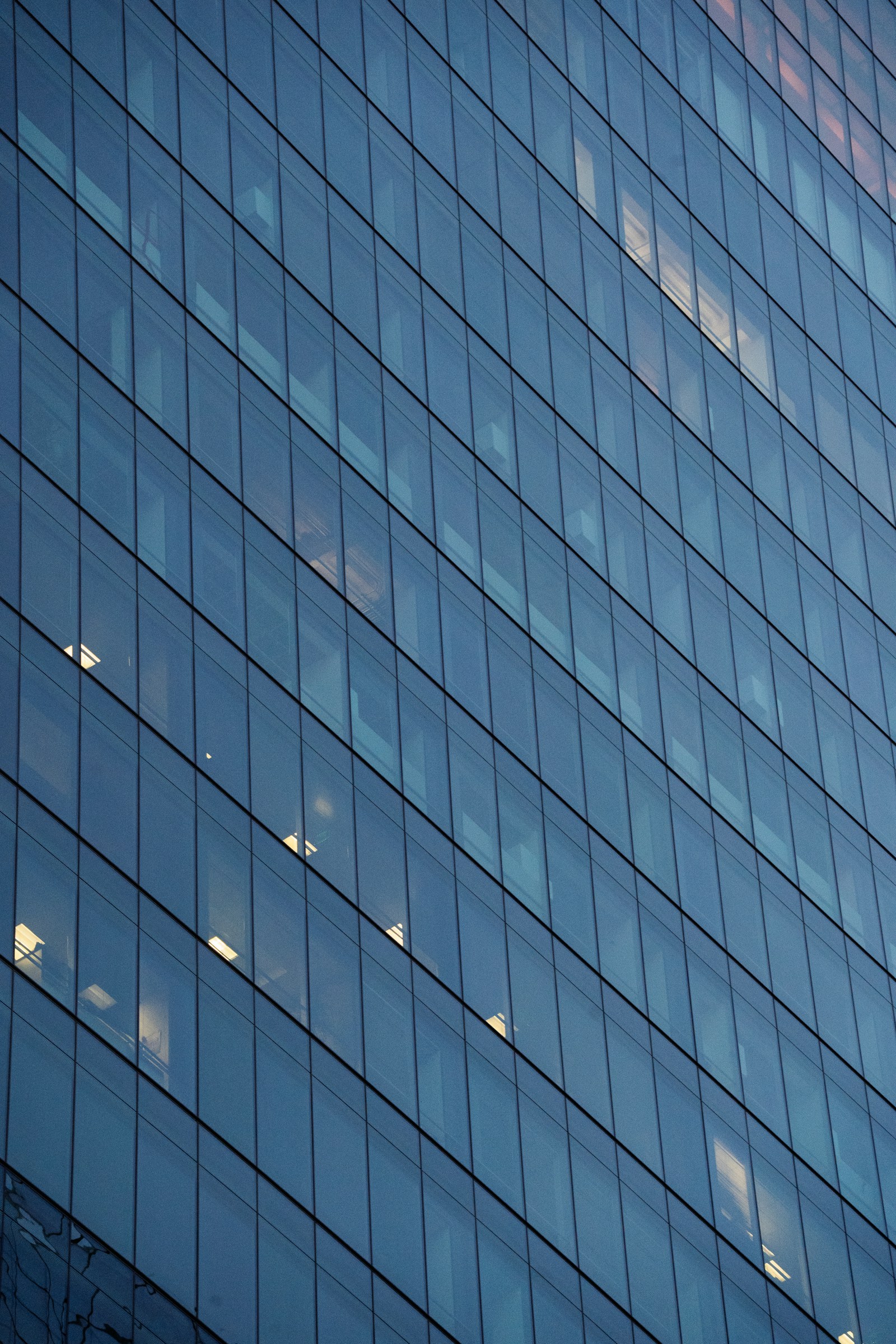
What we clean and what a high-access rinse can accomplish
Drone Building Cleaners cleans exterior commercial building surfaces, including compatible glass, facade panels, selected masonry, stucco, canopies, parapets, roofline features, and other exterior areas identified during review. On this service page, the focus is glass and the adjacent components that influence how it can be rinsed. A maintenance rinse may reduce loose traffic film, pollen, ordinary airborne dust, bird residue, and water-soluble soil on suitable glazing. Purified water may be considered where water quality and the desired dry finish support it. Frames, spandrel panels, mullions, signs, vents, and surrounding cladding are documented because water applied to glass also reaches edges and lower surfaces.
The requested finish should be decided before equipment is selected. Remote rinsing can be an efficient maintenance step for a broad upper facade, but it is different from hand agitation and squeegee detailing at arm's length. Mineral scale, construction debris, adhesive, paint, sealant bleed, metal oxidation, and deeply bonded deposits may require a test, direct contact, specialty chemistry, or restoration by an appropriate provider. Operable windows, deteriorated gaskets, known leakage, damaged coatings, and cracked glazing may need to be excluded until the property team obtains qualified guidance. We state those limits in the proposal so the customer can compare the expected improvement with the cost and disruption of other methods.
A representative test area is often the fastest way to answer the finish question. Once dry, the property contact can review whether loose soil has released, whether spotting remains, and whether frames or deposits need a different process. The approved test helps define included elevations and acceptance criteria. It does not guarantee identical results where materials, sun exposure, repairs, or contamination change across the building, but it turns a vague request for clean windows into a practical scope.
- Exterior glass and compatible facade panels on approved elevations.
- Loose environmental soil and maintenance-level surface film.
- Frames and adjacent surfaces only when specifically included.
- A documented dry-finish expectation, test area, and list of exclusions.
Philadelphia property types require different access plans
Center City combines tall glass towers, hotels, institutional buildings, historic neighbors, transit entrances, loading activity, and heavily used sidewalks. On Market Street, Chestnut Street, JFK Boulevard, or around Rittenhouse Square, an upper elevation may be physically reachable while the ground operation is not workable during normal business hours. Launch and recovery space, hose routing, water equipment, observers, entrances, deliveries, outdoor seating, bicycle movement, and neighboring windows all belong in the serviceability decision. A quieter work window can help, but it does not eliminate the need for property permission or any applicable public-space and aviation review.
University City properties often combine glass with laboratories, healthcare uses, academic buildings, residences, and continuous shift or campus activity. Air intakes, sensitive operations, emergency access, patient or student movement, and security procedures may control the sequence. At the Navy Yard, some campuses offer broader setbacks and private operating areas, yet industrial activity, parking, utilities, roof equipment, and waterfront wind still require review. Along the Delaware River, exposed elevations can experience different wind and drying behavior than protected courtyards. In Old City, Society Hill, and parts of North Broad, modern glass may sit beside older brick, stone, terra cotta, metal, or wood that should not receive the same treatment by default.
Neighborhood labels are useful for understanding context, not for declaring a building suitable. A low-rise retail property in Fishtown may have easier vertical reach but tighter lot lines and constant customer traffic. A hotel in the stadium area may have more staging room but event-driven circulation. A warehouse conversion in Kensington may include repaired openings, mixed-age glass, painted masonry, and irregular drainage. We review each elevation as its own work zone and can recommend a hybrid scope when remote rinsing fits one side while poles, a lift, direct detailing, or postponement better serves another.
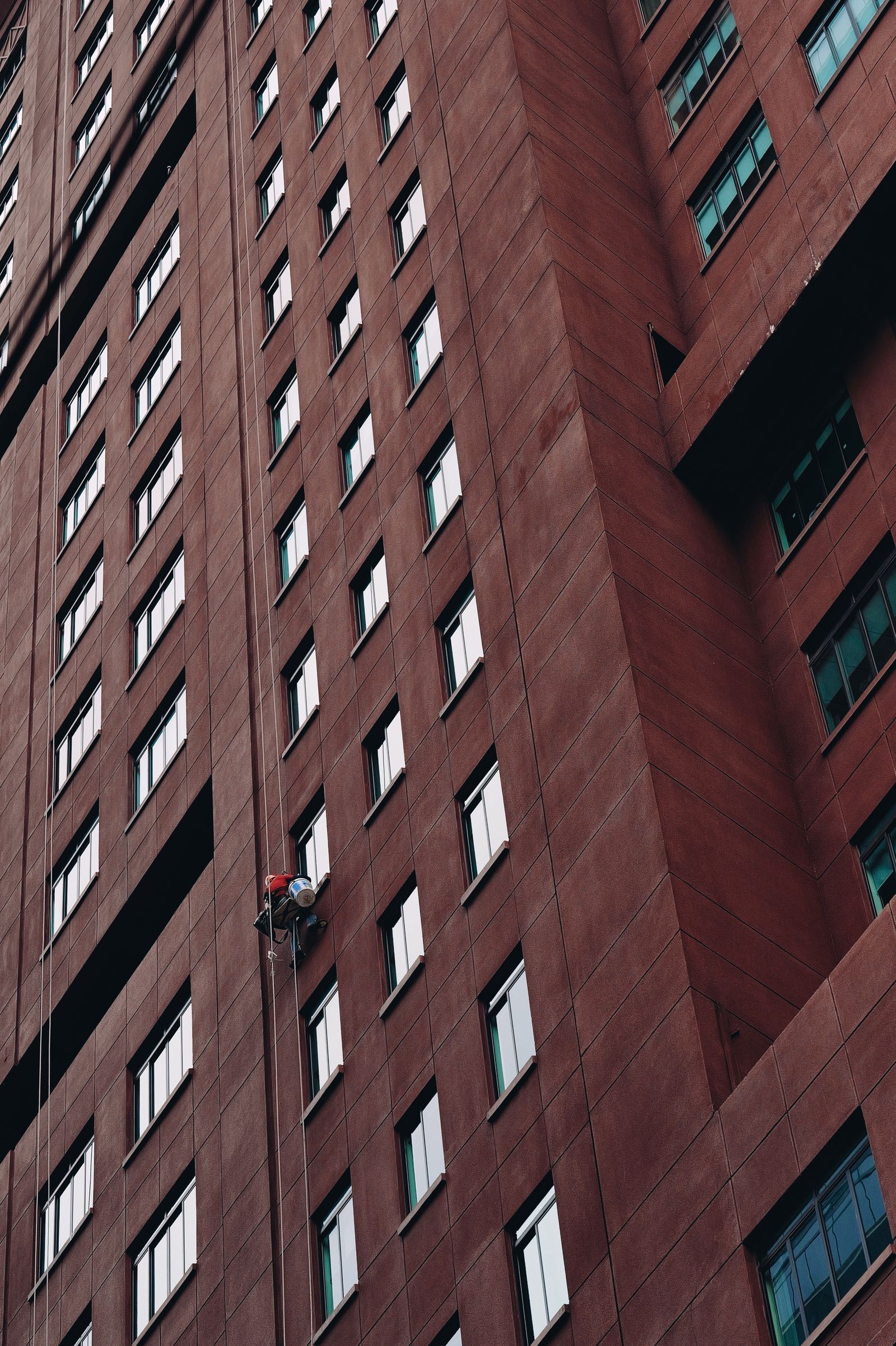
When drone-assisted rinsing fits and when another method is better
Drone-assisted rinsing is most useful where a broad compatible surface can be reached with stable stand-off distance, visual line of sight, a controlled ground area, manageable water delivery, and a predictable spray path. It may reduce the need to move a lift repeatedly across a large facade or place heavy equipment on a constrained surface. The advantage is access to a maintenance task, not a promise that an aircraft can replace every glass-cleaning technique. Recessed windows, deep fins, balconies, screens, overhead wires, signs, narrow alleys, active roads, trees, roof projections, and neighboring property can reduce coverage or make an elevation unsuitable.
Direct access is usually better when a technician must agitate bonded soil, squeegee to a close-detail standard, scrape approved debris, treat mineral deposits selectively, or inspect the result from arm's length. Water-fed poles can be efficient on lower compatible elevations. A properly selected lift may serve detailed panels or geometry that blocks remote application. Specialized suspended access may be needed for other conditions. Drone Building Cleaners can build the cleaning scope around the building instead of forcing the whole property into one access category.
Commercial drone operations require a separate flight review. The FAA's Part 107 framework addresses remote-pilot qualifications, aircraft and operating requirements, visual line of sight, operations over people and moving vehicles, and controlled-airspace authorization where applicable. Philadelphia's proximity to airports, heliports, dense public activity, and temporary flight conditions means an address must be checked for the proposed date and operation. Property consent does not replace FAA requirements, and an airspace authorization does not grant use of a sidewalk or neighboring parcel. If the flight plan cannot be operated within applicable requirements and site controls, we change the method or exclude the area.
- Drone delivery for suitable open facade fields and maintenance rinsing.
- Pole, lift, or direct-contact methods where detailing or geometry requires them.
- Aviation and ground-operation review before confirming drone serviceability.
- A fallback method or clear exclusion for areas that cannot be controlled.
Water quality, runoff, and Philadelphia weather affect the result
Exterior glass rinsing moves water from upper surfaces to frames, ledges, lower walls, sidewalks, roofs, landscaping, and drains. Before work, we identify the proposed water source, available flow, hose route, equipment location, surface slopes, low points, inlets, entrances, and sensitive components. Water quality can influence spotting, while the amount and direction of application influence runoff. Purified water can improve maintenance rinsing on compatible glass, but it cannot dissolve every deposit or guarantee a perfect dry result when frames release soil, wind redistributes droplets, or the glass has existing damage.
Philadelphia Water Department regulations state that connections allowing non-stormwater discharges, including wash water, into the separate storm sewer system are prohibited except as otherwise provided. A drain's destination should not be guessed from its location or grate. Depending on the property, soil, treatment solution, drainage system, and current requirements, the plan may involve source reduction, inlet protection, containment, collection, filtration, recovery, hauling, or an accepted disposal route. The cited regulations inform planning; they do not provide project-specific permission. The property and service team may need current direction from the responsible authority or a qualified environmental professional.
Weather can close an otherwise workable service window. National Weather Service Philadelphia climate records document precipitation, snow, and freezing conditions as part of the local climate. Wind at an upper elevation may differ from sidewalk conditions, especially around towers, corners, and river-facing facades. Heat and direct sun can accelerate drying, while cold surfaces can create ice risk after runoff reaches shaded pavement or a loading area. We define pause conditions for wind, precipitation, temperature, visibility, and loss of spray control. The job should be rescheduled when water cannot be kept on target or the property cannot be returned in a stable condition.
Protect occupants and keep the building operating
A useful cleaning plan starts with how the property actually functions. We ask about opening hours, peak arrivals, tenant schedules, deliveries, valet or loading activity, public entrances, accessible routes, outdoor dining, emergency access, security rules, and other contractors. Building staff can identify operable windows, facade leaks, air intakes, sensitive roof equipment, recent sealant work, and spaces that should not receive water. The work can then be divided into smaller elevations or vertical zones with agreed notices, temporary controls, and a protected route where continuous access is required.
Ground controls must account for the complete operation, not only the point below the aircraft or nozzle. Water systems, hoses, spotters, launch and recovery space, equipment, wet surfaces, and possible drift all occupy space. Cones may support a plan but are not sufficient in every customer-facing or public environment. A hotel entrance near Reading Terminal Market, a medical facility in University City, an office lobby on Market Street, and a mixed-use courtyard in Northern Liberties have different interruption limits. We coordinate the proposed sequence with the property contact and stop if normal conditions change in a way that defeats the control plan.
Closeout matters to a busy property. The crew documents treated elevations, known exclusions, representative before-and-after conditions, and areas that need another cleaning method or specialist attention. Photographs are maintenance records, not engineering or architectural conclusions. Hoses and temporary controls are removed only after the ground area has been checked, and any delayed drainage from frames, ledges, canopies, or roof edges is considered. This gives facility teams a clear account of what was cleaned and what remains.
Request a quote built around your Philadelphia property
A useful quote needs more than building height and a square-foot estimate. Share the property address, building use, elevations of concern, approximate number of stories, photographs if available, known glass or coating information, water access, preferred work windows, and the result you expect. Tell us about known leaks, loose components, facade repairs, active construction, unusual deposits, or operational restrictions. These details help Drone Building Cleaners determine whether the next step is a remote review, site walk, test area, or referral for a condition outside cleaning.
The proposal should identify surfaces, elevations, access assumptions, water approach, expected finish, exclusions, occupant controls, weather limits, and any alternate method. It should distinguish maintenance rinsing from glass restoration, facade inspection, repair, and professional services. Broad upper glass with a controllable operating area may suit drone-assisted service. Where direct contact is needed, the honest recommendation may be a hybrid or conventional scope.
If your commercial windows look dull from traffic film, pollen, ordinary dust, or seasonal exposure, request a quote. We can evaluate office, hospitality, retail, institutional, mixed-use, industrial, and multi-property needs throughout Philadelphia without claiming that every facade requires the same equipment. The goal is straightforward: clean the compatible exterior glass, minimize avoidable disruption, document the work, and give your team realistic expectations before mobilization.